
Cameroon
Where Rainforest Runs to the Border
Cameroon’s Congo Basin safaris are for travelers who want depth: dense forest, slow tracking, and a landscape shared across nations.
Cameroon is a threshold country—one foot in the Congo Basin rainforest, the other in savanna and coast—but its most safari-relevant regions lie in the southeast and south, where the forest stays thick and the pace naturally slows. Here, wildlife viewing isn’t about long game drives; it’s about waterways, forest clearings, and expert-led movement through habitat that still feels largely intact. Because travel conditions and security can vary by region, we plan Cameroon with careful routing and real-time diligence, prioritizing areas where access is stable and conservation work is meaningful. (The U.S. currently flags several regions as higher risk, including the Northwest and Southwest, and parts of the North/Far North and East/Adamawa.)
One of Cameroon’s most important rainforest sanctuaries is the Dja Faunal Reserve, a UNESCO World Heritage site known for being one of the largest and best-protected rainforests in Africa, with most of its area undisturbed and bounded in large part by the Dja River. For a safari traveler, that “undisturbed” quality translates into something rare: a forest that still holds its own logic—quiet, layered, and more often heard than seen. It’s also a place where primates and biodiversity are central to the story, making guided interpretation and patience far more valuable than a checklist mindset.
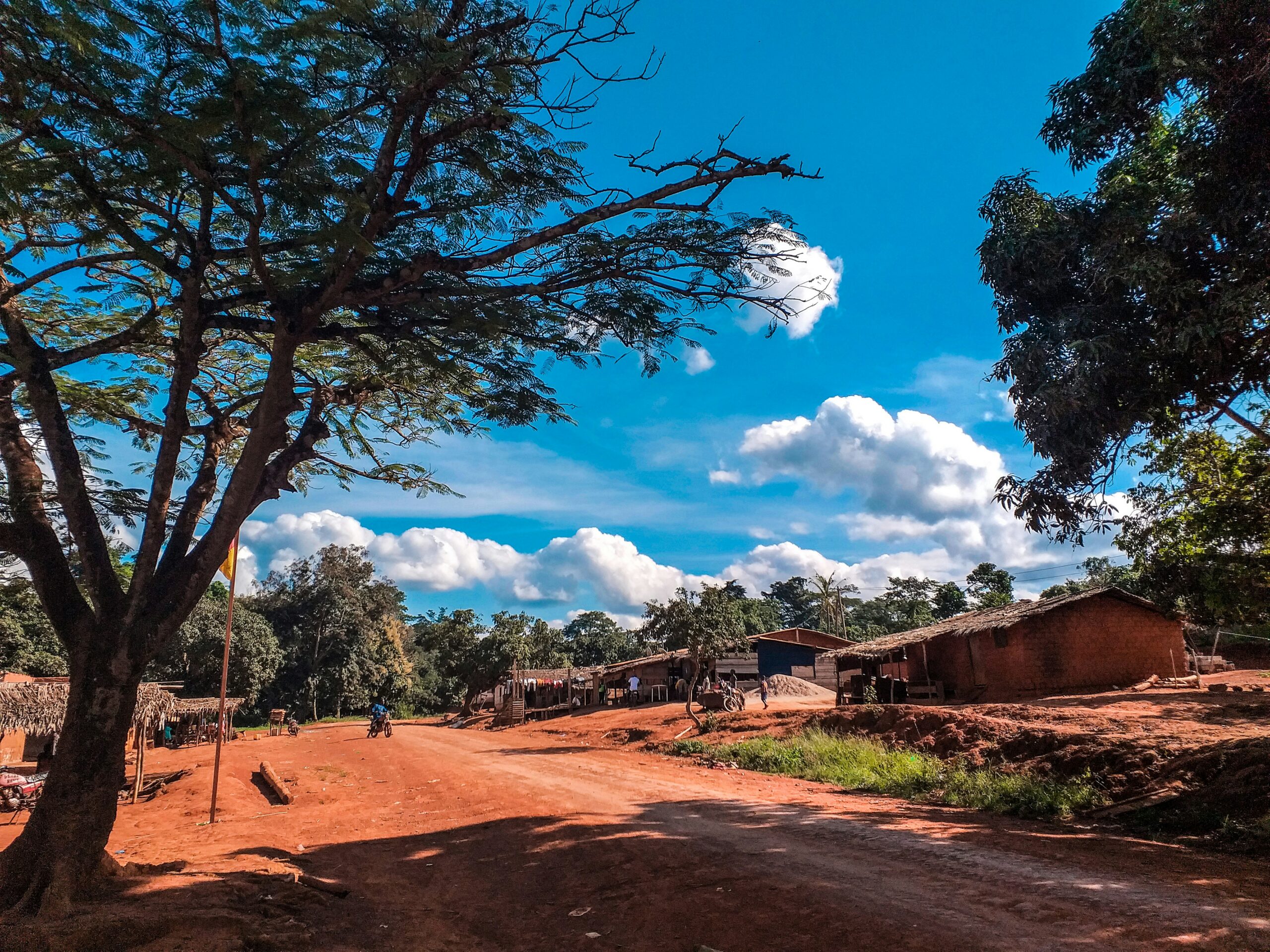
Farther east, Cameroon touches the Sangha Trinational landscape, where protected areas align across Cameroon, the Central African Republic, and the Republic of the Congo. This is where the Congo Basin safari starts to feel transboundary in the best sense: the same forest continues, and conservation is designed at the landscape scale rather than as isolated “parks.” In places like Lobéké National Park, forest clearings and wetland mosaics can concentrate wildlife movement—creating those quiet, front-row moments that are less about proximity and more about time spent in the right place.
In the far south, Campo Ma’an adds another dimension: a globally significant biodiversity landscape where great apes and forest elephants are part of the ecological fabric, alongside many other mammals. For planners, this is where Rewild’s approach matters most—choosing partners who are transparent about what’s realistically viewable, what requires permissions, and how tourism can support (rather than complicate) protection and community livelihoods.