
Great Barrier Reef
A Living Seascape
Tasmania’s forests taught us silence; the Reef teaches us buoyancy.
The Reef’s scale is hard to hold in your mind until you’re out on the water and realize it isn’t “one place,” but a long chain of ecosystems — coral gardens, seagrass meadows, islands, and open sea — stitched together by weather and tide. For safari-minded travelers, that means we design days around conditions: where visibility is best, where the sea is calm enough for meaningful time in the water, and where wildlife viewing can happen without pressure or crowding.
Seasonality matters, mostly because it shapes comfort and clarity. Many travelers prefer the drier months (often May–October) for steadier weather and clearer water, especially if snorkeling or diving is central to the trip. If whales are part of your “why,” Queensland’s east coast sees whales along the migration corridor for much of the year, with humpbacks commonly noted July–September, and dwarf minke whales encountered May–August in parts of the northern Reef.
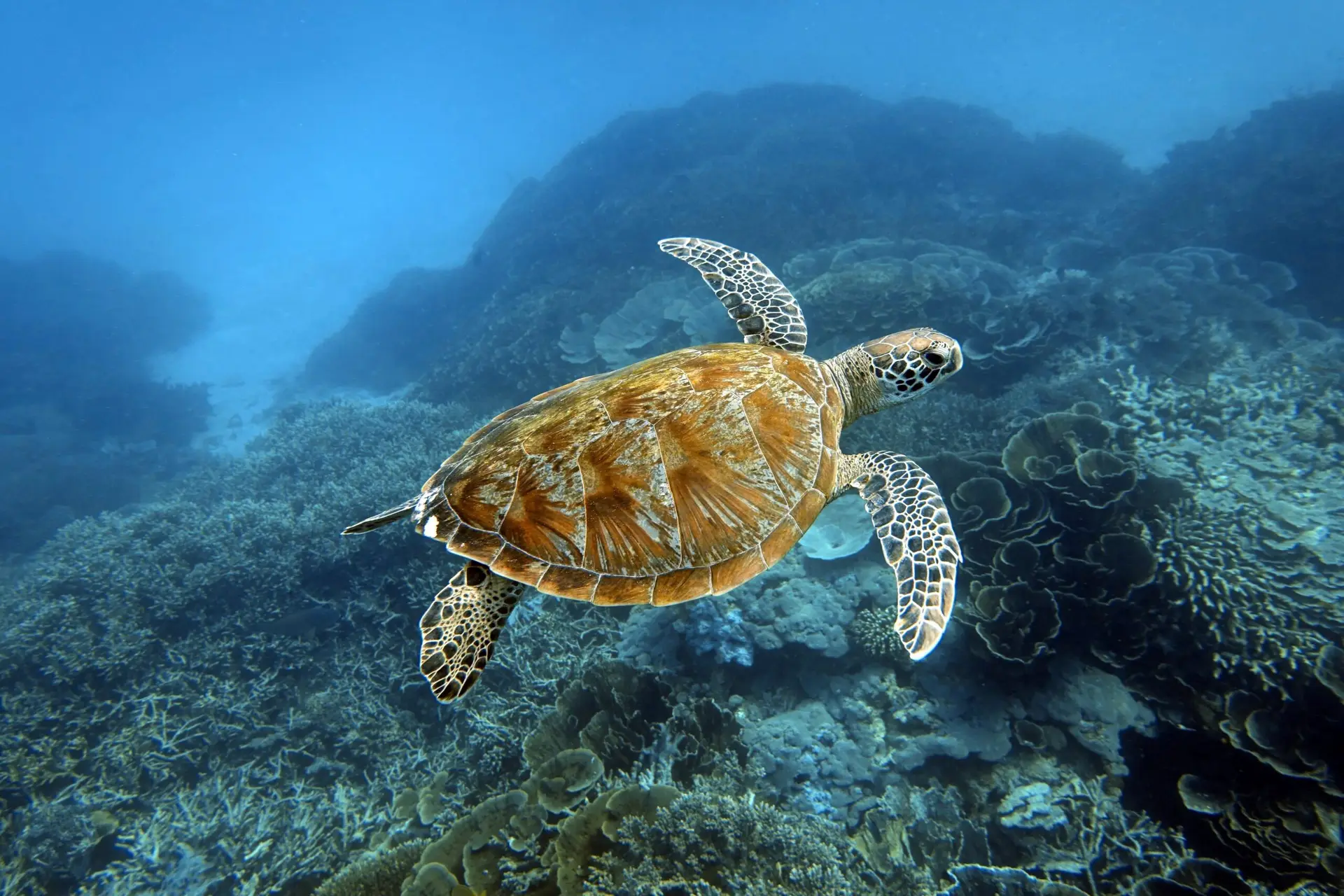
The Great Barrier Reef Marine Park Authority is clear: don’t damage or take coral (even dead coral) and follow the legal rules designed to protect the ecosystem. In practice, that means neutral buoyancy over coral, slow finning, no touching wildlife, and choosing operators who brief well, enforce distances, and treat the Reef as a living reserve, not a playground.
And then, the human side: the best Reef days often include time not in the water — watching weather build on the horizon, listening to guides translate what you’re seeing, and giving your nervous system room to downshift. This is luxury as care and expertise: the right vessel, the right timing, the right site selection, so your presence supports the place rather than stressing it.